
We celebrate the 100th anniversary of the visionary Danish designer with the story of Louis Poulsen's iconic Panthella.
At Paris:Sete, we are passionate about the stories and creative processes that give soul to the pieces that transform our spaces. To mark the 100th anniversary of the legendary architect and designer Verner Panton, we delve into one of his most iconic creations: the Panthella lamp by Louis Poulsen.
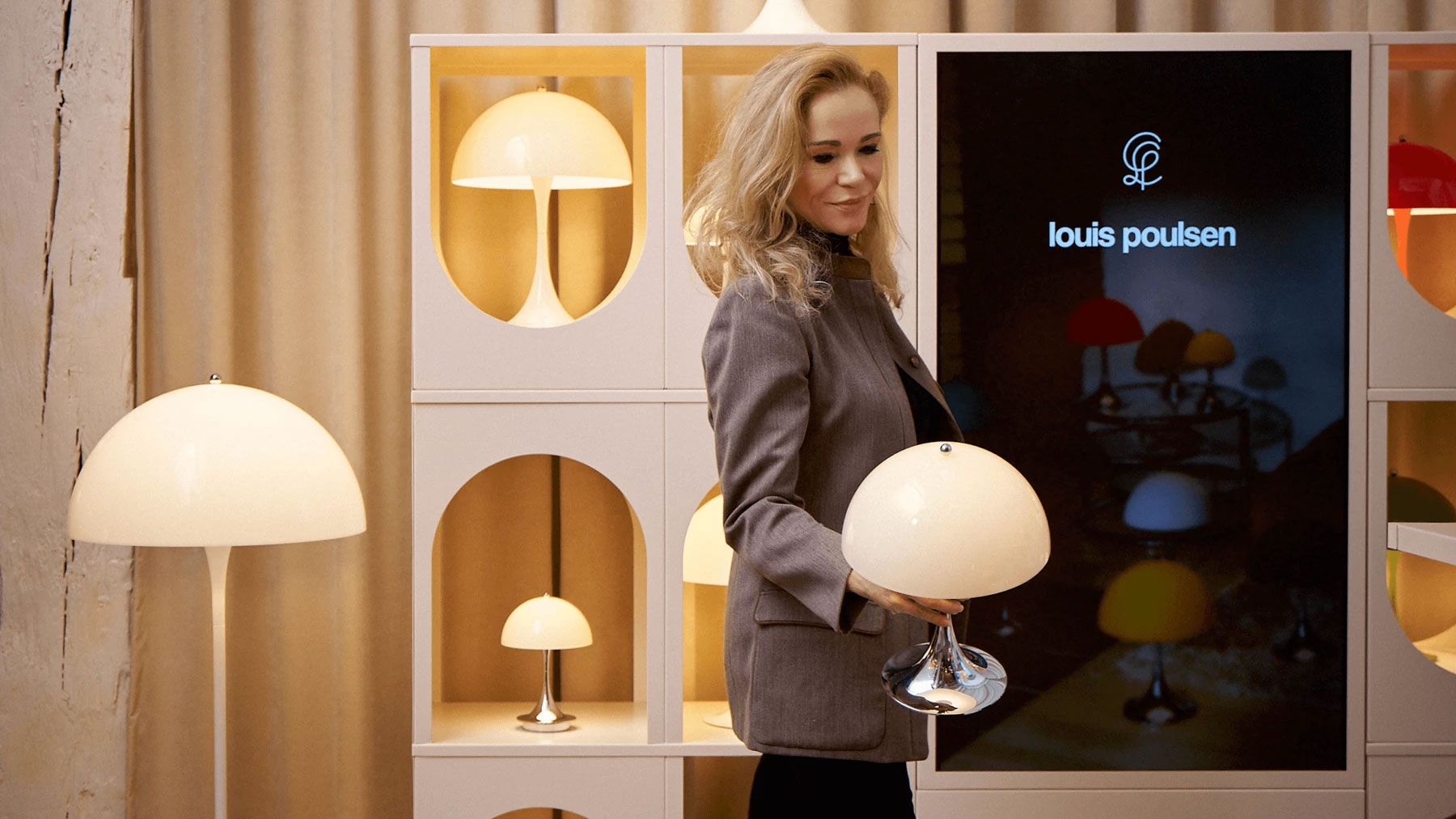
Through an intimate conversation shared by Louis Poulsen with Carin Panton, the designer's daughter, we discover the influences, friendships, and unique vision that gave rise to this true icon.
A Vision of Light and Color
For Verner Panton, light was never just a functional necessity; it was an intrinsic and inseparable part of his creative universe. Panton argued that the interaction between form, color, and light determined how spaces and objects were perceived.
As his daughter, Carin, recalls, Panton did not approach his work with the deliberate intention of creating something "timeless." Instead, his imaginative and curious mind was driven by a deep fascination with patterns, organic forms, and vibrant colors. He didn't follow trends; he had an absolutely unique design language.
 The Influence of the Great Masters
Panton's path crossed early on with two giants of Danish design: Poul Henningsen and Arne Jacobsen. What began as a mentorship relationship during his architecture student days quickly evolved into a deep mutual respect.
It was with Poul Henningsen that Panton learned one of the golden rules of lighting: a lamp should never glare, and the eye should never cross directly with the light source. This philosophy became rooted in Panton's work. The friendship between them – full of lively and constructive discussions – stimulated Panton's imagination, resulting in pieces that, although very different from Henningsen's aesthetic, shared the same technical demandingness and aesthetic commitment.

The Birth of an Icon: The Panthella
Designed in 1971, the Panthella is the perfect materialization of Verner Panton's philosophy. But what makes it such an iconic piece even today?
Today, it is clear that the Panthella does not belong to a specific style; it exists in a category of its own, endowed with undeniable purity. In the 1970s, it must have been the freshness and novelty of its design that immediately captivated the public. With its elegant lines, immaculate geometric shape, and soft, diffused light emanating from the translucent shade, the Panthella earned its place as a classic that many continue to adore.
To celebrate the centenary of the birth of this design genius, Louis Poulsen is bringing back the original versions (The Originals) of this wonderful piece. And we, at Paris:Sete, have the privilege of sharing them with you.
We invite you to discover the organic universe of Verner Panton and explore the Panthella collection in our showroom at Rua da Escola Politécnica 235, in Lisbon.