

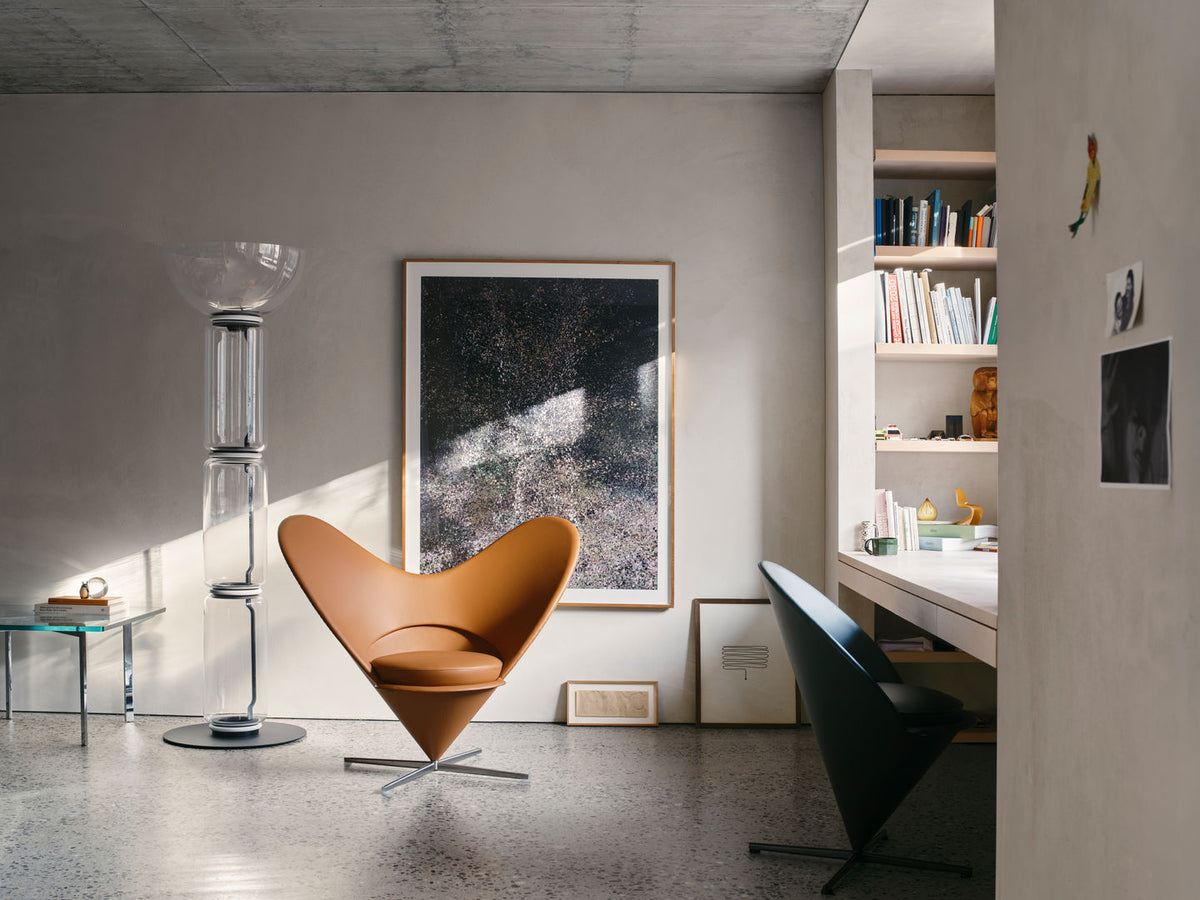
If he were alive, Verner Panton would be celebrating 100 years this year. A symbolic moment for one of the most influential names in 20th-century design, whose visual language continues to deeply shape how we understand color, form, and space. Panton distinguished himself by challenging the dominant sobriety of his time, advocating for a freer and more experimental approach where design emerges as a way to stimulate imagination and transform everyday life.

His career, which began after studying architecture in Denmark and a period at Arne Jacobsen's studio, quickly evolved into an independent practice marked by boldness. Panton explored geometric forms and intense colors as the central language of his work.

It was in this universe that iconic pieces like the Heart Cone Chair, designed in 1958, emerged, which still stands out for its originality today. Verner Panton believed that space could and should evoke emotions. And the truth is that his legacy remains relevant, decades later.